
Hiring a caregiver for your parents is one of the most consequential decisions in 2026. In India, where the home care sector remains largely unorganized, the difference between a safe arrangement and a risky one often comes down to how thoroughly you verify before you trust . This guide walks you through a practical, step-by-step process—from defining the role to running a supervised trial—so you can make an informed choice with confidence.
Heading Step 1: Clarify What Kind of Care Your Parents Actually Need (Don't Rush to Hire)
Before you interview a single candidate, sit down with your parents and, if possible, their doctor to map out the actual support required. A "caregiver" is not a single role. A companion who provides company and helps with groceries is very different from a personal-care attendant who assists with bathing and mobility, and both are different from a qualified nurse who can manage wound care or injections . Ask specific questions: Does your parent need help with daily activities like dressing and toileting? Are there medication reminders involved? Is there a dementia diagnosis or a risk of falls? The answers determine whether you need a non-medical attendant, a trained nurse, or a specialised dementia caregiver. Hiring one person to "do everything" without matching skills to tasks is where many families run into trouble . Key takeaway: Write a one-page care brief. List the daily routine, medical needs, mobility limitations, language preferences, and privacy boundaries. This document becomes the foundation for every conversation that follows.
Step 2: Agency vs. Independent Caregiver—Which Is Safer? Both routes have trade-offs, and neither is automatically safer. Going through an agency gives you a layer of institutional accountability. Reputable agencies handle background verification, provide replacement staff when someone is absent, and offer written terms of service . You have a named supervisor to escalate concerns to. However, quality varies wildly, and an agency's brochure is not proof that a specific caregiver has been properly vetted . Always ask what screening was actually completed for the individual being sent to your home. Hiring independently may cost less and give you more direct control, but the burden of verification falls entirely on you. You will need to run police verification, check court records, and contact previous employers yourself . There is also no backup if the caregiver quits suddenly or falls ill. For families living abroad or in another city, an agency with a local supervisor and a clear escalation process is often the more practical choice—provided you verify the agency's claims rather than taking them at face value . Key takeaway: Whether agency or independent, insist on meeting the actual caregiver before committing. Ask directly: "Who verified this person's identity and background, and can I see the documentation?"
Step 3: The "Must-Ask" Verification Checklist (Aadhaar, Police Verification, References) This is where many families stop short—and where the most important work happens. Identity and address: Ask for original ID documents (Aadhaar, voter ID, or passport) and confirm they match the person in front of you . Store copies securely; do not circulate them in large WhatsApp groups . Police verification: Most Indian states allow citizens to apply for domestic help verification through their local police station or state police portal . This catches recent FIRs and local records that a court check alone may miss. The national Digital Police portal also offers antecedent verification services for prospective employees, including domestic help . Request that the caregiver complete this process, or confirm that the agency has done so. Court record check: You can search the caregiver's name on the eCourtsIndia litigant search for free, using their name, father's or husband's name, age, and home district. Look for cases involving theft, cheating, forgery, or assault—offences particularly relevant to a role with access to a vulnerable person and the home . Remember that a pending case is an allegation, not a conviction; give the candidate a chance to explain before making a decision. Reference calls: Ask for at least two previous employers and actually call them. Ask specific questions: How long did the person work with you? What were their daily responsibilities? Were there any concerns? Would you rehire them? Generic praise is less useful than detailed, honest feedback . Clinical credentials (if applicable): If the caregiver will perform nursing tasks, ask for the qualification certificate and registration number, and verify it with the relevant State Nursing Council . Registration alone does not guarantee suitability—also ask about their recent experience with your parent's specific condition. Key takeaway: Never skip the reference calls. A caregiver who cannot provide two reachable former employers is a red flag worth taking seriously .
Step 4: The 5 Most Useful Interview Questions (With "Red Flag" Answers) Interviews should test judgement, not just experience. Use realistic scenarios and listen carefully to how the candidate responds. Question 1: "What would you do if my mother fell and couldn't get up?" A safe answer includes: keeping her still, checking for pain or injury, calling for help according to the agreed emergency plan, and not attempting to move her if a fracture is possible. A red-flag answer is "I would pick her up and put her on the bed" or any response that involves improvising medical care . Question 2: "My father sometimes refuses to take his medicine. How would you handle that?" Look for patience and escalation: "I would try again later, tell you about it, and not force him." A red flag is "I would make sure he takes it" or any indication they would hide medicine in food without authorization. Question 3: "What would you do if you noticed money missing from the house?" A good answer: report it to the family immediately and not investigate independently. A red flag: defensiveness, or suggesting they would "handle it quietly." Question 4: "Can you describe a time you had to deal with a medical emergency?" Listen for concrete details: what happened, what they did first, who they called. Vague answers ("I just managed it") are less reassuring than specific ones. Question 5: "How would you handle it if my parent wanted to do something you thought was unsafe?" The right answer respects the parent's autonomy while following family guidelines: "I would explain the concern, and if they insisted, I would call you." A red flag is any answer that suggests the caregiver would overrule the parent without consultation . Also observe: Does the candidate speak directly to your parent during the interview, or only to you? Do they ask questions about your parent's routines and preferences, or do they assume? A good caregiver listens and adapts .
Step 5: How to Set a Trial Period and Write a Simple Contract The trial period is non-negotiable. A one-to-two-week supervised trial allows both your family and the caregiver to assess fit before committing long-term. This is standard practice and should not be framed as an insult . During the trial, a local family member or trusted contact should observe at least one full shift. Watch for punctuality, hygiene, safe mobility assistance, respectful communication, and whether the caregiver follows the agreed routine. Ask your parent privately how they feel—many older adults hesitate to complain for fear of losing support . The written agreement should cover, at minimum: Working hours and rest days Specific duties and explicit exclusions (e.g., "no changing of medication without written instruction") Monthly compensation and payment date Notice period and replacement process Emergency contacts and escalation protocol Rules regarding keys, visitors, photographs, and personal information State clearly that the caregiver must never receive ATM PINs, banking passwords, or OTPs, and should not sign documents on your parent's behalf . Key takeaway: A written contract protects both your parents and the caregiver. It removes ambiguity and creates clear expectations for conduct and accountability.
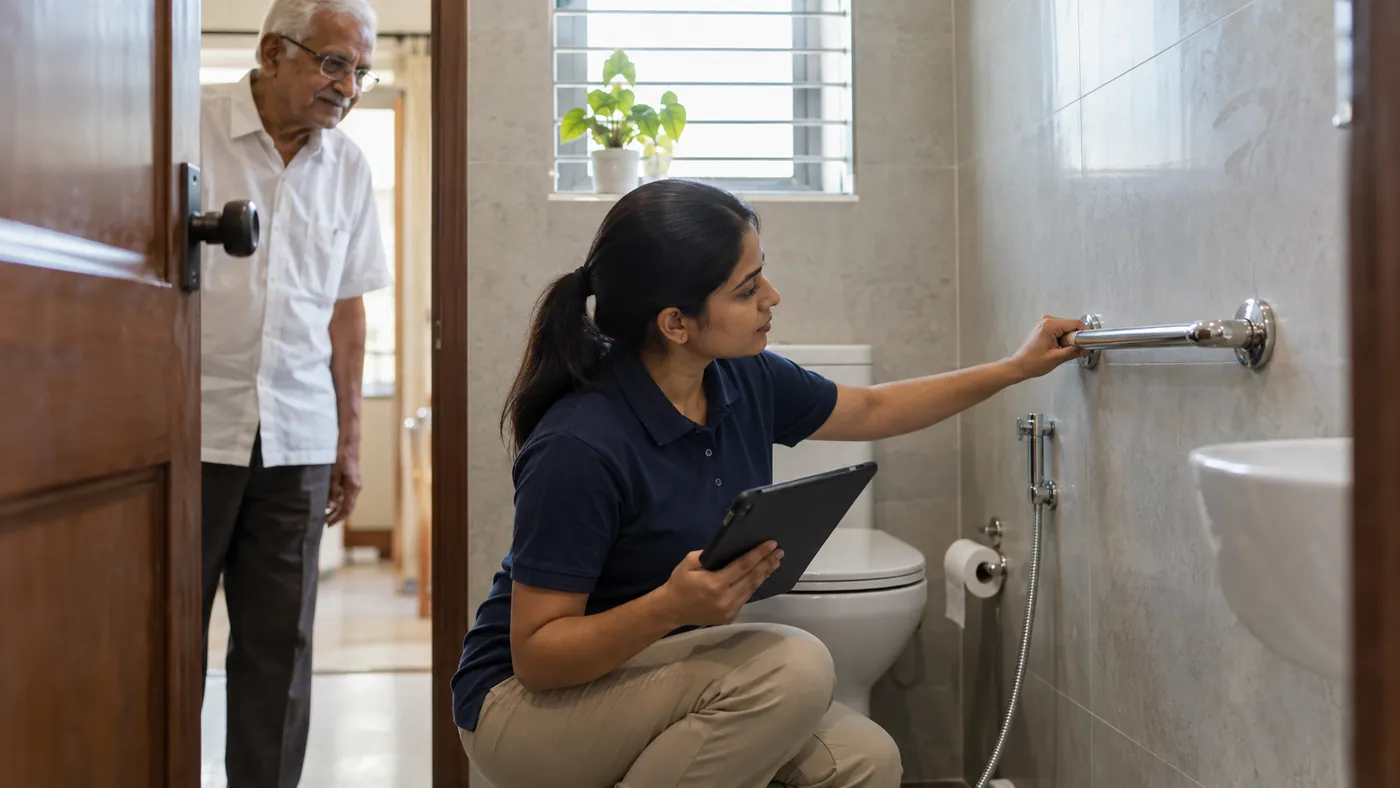
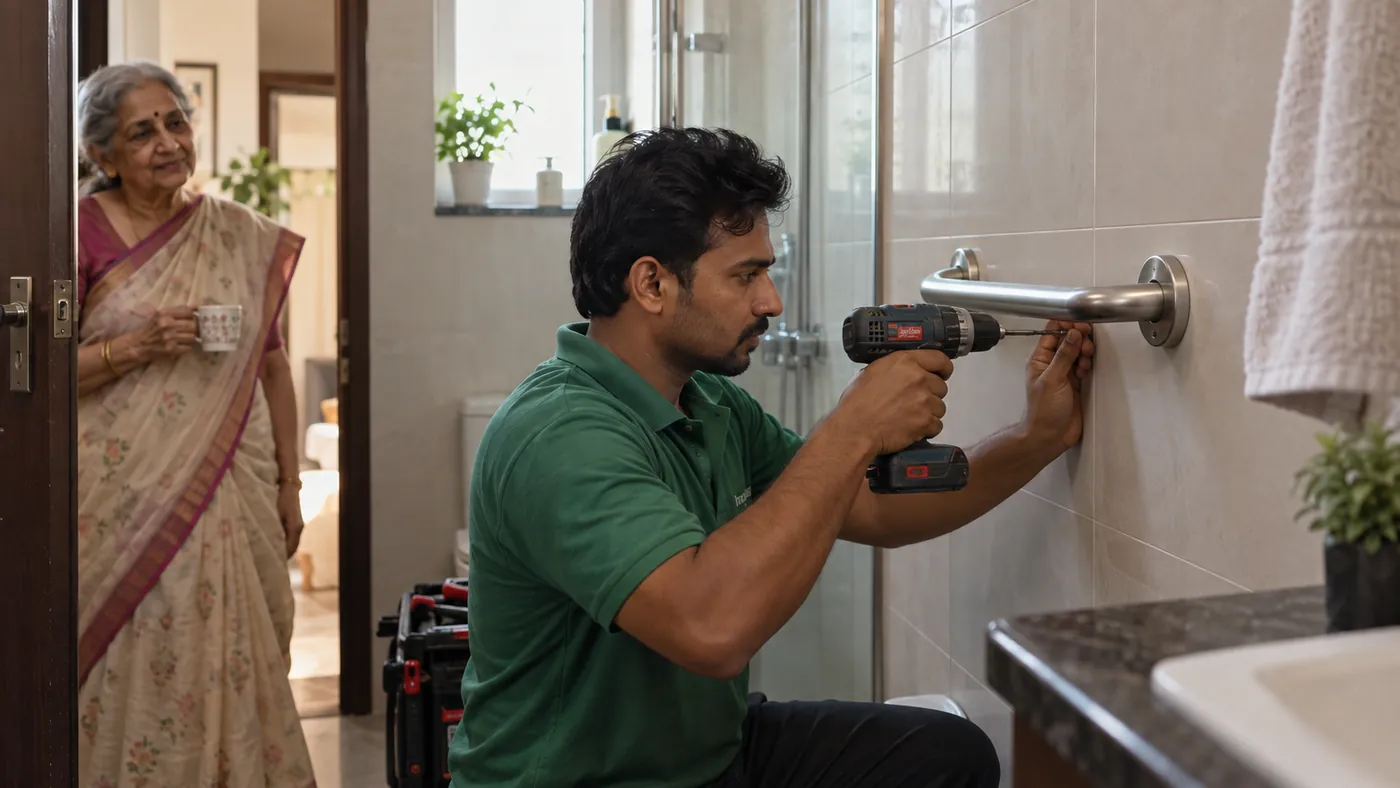
What to Do If You Live Abroad (NRI Special Note) For adult children in the US, UK, Gulf, or elsewhere, the anxiety of managing care remotely is real and common . The distance makes verification more important, not less. Build a local support layer. Identify a trusted neighbour, relative, or family friend who can visit unannounced and observe how the caregiver interacts with your parent. Their eyes on the ground are more valuable than any agency's assurance. Insist on structured updates. A reliable caregiver or agency should provide regular written or voice updates—what your parents ate, whether they took their medication, any changes in mood or mobility . Vague reassurances ("everything is fine") are not enough. Consider Kushalaya's home-safety assessments. Before or alongside hiring a caregiver, a professional assessment of the home environment—grab bars, lighting, trip hazards, bathroom safety—can reduce the risk of falls and make the caregiver's job safer and more effective. Kushalaya's field teams conduct these assessments and coordinate installation of safety improvements, providing documentation and family updates throughout the process . This creates a documented baseline of the home's condition and a record of what was changed and why. Have an emergency plan in writing. Your caregiver should know exactly which hospital to call, which doctor to contact, and which family member to reach first. Keep this plan visible in the home and share it with your local contact
Conclusion Choosing a reliable caregiver is not about finding someone with the longest experience or the lowest price. It is about verifying identity, checking records, asking the right questions, and structuring the arrangement so that expectations are clear and accountability is built in. Start with a precise understanding of what your parents need. Verify every claim. Run a supervised trial. And if you live far away, build a local layer of oversight that does not depend on the caregiver's own reporting.
Kushalaya's home-safety assessments can complement this process by ensuring the physical environment is as safe as the person you bring into it. Explore Kushalaya's senior home-safety services to request an assessment and learn how coordinated safety improvements can support your parents' independence—and your peace of mind.
Questions families ask
Is police verification mandatory for caregivers in India?
Requirements vary by state and locality, but it is strongly recommended regardless. Most state police portals allow citizens to apply for domestic help verification for a nominal fee—for example, Uttar Pradesh charges ₹50 and processes the application through the local police station, intelligence unit, and crime records bureau. The process typically involves submitting a photo, identity proof, and address proof, after which a digitally signed certificate is issued. Ask the caregiver or agency to complete this before the trial period begins and request a copy of the report for your records.
What is the difference between an attendant, a caregiver, and a nurse?
These roles are often used interchangeably, but they are not the same. An attendant provides physical help with mobility, bathing, feeding, and toileting—but does not perform clinical tasks. A caregiver covers daily living support plus companionship, supervision, and medication reminders, making them the right choice for most elderly parents with age-related frailty or dementia. A qualified nurse (GNM, ANM, or B.Sc Nursing, registered with the State Nursing Council) handles injections, wound care, catheter management, and vitals monitoring. Expecting an attendant to perform nursing tasks is unsafe; paying for a nurse when your parent mainly needs companionship is unnecessary.
How much should I budget for a reliable caregiver in India?
Costs vary by city, hours, and skill level. Current market estimates put a 12-hour trained attendant at roughly ₹12,000–₹22,000 per month, while a live-in attendant costs around ₹18,000–₹35,000 or more. A full-time attendant in a metro city typically ranges from ₹25,000–₹40,000 per month. Qualified nursing care costs significantly more—a professionally qualified nurse may charge ₹1,600–₹1,800 or more for a 12-hour shift. Keep in mind that caregiver fees are only part of the picture; medicines, tests, and consumables can add another ₹20,000–₹25,000 per month for chronic conditions.
Does health insurance cover home care for elderly parents in India?
Most standard health insurance policies do not cover ongoing home care for chronic conditions or long-term elderly care. While some policies include provisions for "home hospitalization" or domiciliary treatment, this typically applies only when hospital beds are unavailable or the patient's condition prevents hospital admission, and coverage is often capped. Long-term caregiving costs—such as hiring a full-time attendant for daily support—are generally paid entirely out of pocket. Check your specific policy documents and speak directly with your insurer before assuming coverage.